Create Stunning Visuals with a Multipurpose Postcard Template
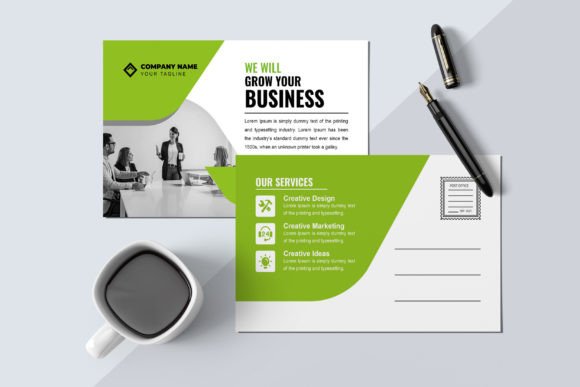
There is a specific kind of frustration that comes with staring at a blank canvas when you have a deadline looming. Whether you are a small business owner trying to announce a flash sale, a marketer launching a direct mail campaign, or a creative professional sending out portfolio pieces, the design process often hits a bottleneck right at the beginning. This is where a robust Post Card Design Layout becomes more than just a convenience; it becomes a strategic asset. By utilizing a template that prioritizes editability and customization, you bridge the gap between a vague idea and a tangible, high-quality print asset.
The true value of a modern Post Card Design Layout lies in its ability to streamline your workflow without sacrificing professional standards. When we talk about a "clean" design in this context, we aren't referring to minimalism for the sake of minimalism. We are talking about a structured arrangement of elements—typography, imagery, and whitespace—that guides the viewer’s eye naturally. A well-designed template provides the skeleton, allowing you to inject the personality of your brand. It removes the guesswork regarding margins, alignment, and print safety, ensuring that what looks good on screen translates perfectly to paper.
The Anatomy of a Professional Print Asset
Understanding what makes a Post Card Design Layout effective requires looking under the hood at the technical specifications that ensure a professional result. One of the most critical components is the file format versatility. A high-quality template package should not lock you into a single piece of software. Instead, it should offer compatibility across the industry standards: EPS for vector scaling, PSD for Photoshop users who rely on raster effects, INDD for complex editorial layouts in InDesign, and DOC for those who prefer the accessibility of Microsoft Word.
This multi-format approach ensures that whether you are a seasoned graphic designer or a DIY entrepreneur, you can access the design. However, the technical foundation goes deeper than just file types. The color scheme is paramount for print production. A template utilizing CMYK (Cyan, Magenta, Yellow, Key/Black) color space is essential. Unlike RGB (Red, Green, Blue) which is designed for screens, CMYK is the language of commercial printers. By starting with a CMYK-ready Post Card Design Layout, you avoid the common pitfall of colors shifting or looking muddy once the ink hits the paper.
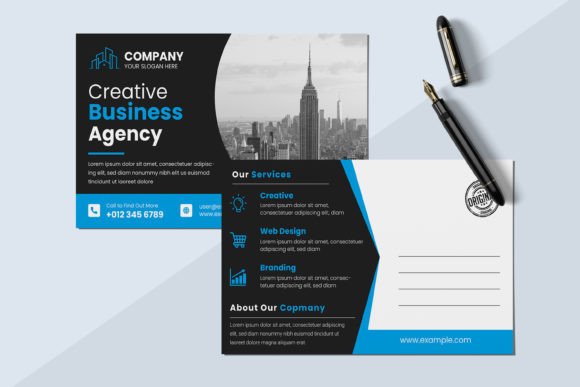
Furthermore, the inclusion of trim and bleed guidelines is a hallmark of a professional design asset. The "bleed" is the area of your design that extends beyond the cut line, ensuring that no unprinted white edges appear if the cutting machine shifts slightly during production. The "trim" is the actual size of the final card. A layout that includes these guides saves you from the headache of resizing files at the last minute and ensures your final product looks polished and intentional.
Streamlining Workflow with Editable Elements
Time is a finite resource, especially for content creators and publishers. The promise of a template where "all main elements are editable" translates directly to efficiency. Imagine you are a blogger or a digital creator needing to produce a set of thank-you cards for your community. Instead of commissioning a designer or spending hours aligning text boxes, a Post Card Design Layout allows you to simply swap the placeholder text with your own message and drag-and-drop your preferred photos.
This ease of use does not mean you are limited in creativity. In fact, the opposite is true. When the structural work is done for you—the kerning, the leading, the grid alignment—you have more mental energy to focus on the creative elements that make your brand unique. You can experiment with different font pairings to see how a serif font pairs with a sans serif font for contrast, or how a script font might add a touch of elegance to a formal invitation.
Typography and Readability in Small Formats
Postcards present a unique challenge regarding typography. Because the format is smaller than a poster but larger than a business card, visual hierarchy is crucial. A good Post Card Design Layout usually comes with a curated selection of premium fonts or links to free fonts that have been tested for readability at various sizes.
When customizing your layout, pay attention to the distinction between display fonts and body copy fonts. A display font, often a bold modern typography style or an intricate handwritten font, is perfect for headlines. It grabs attention immediately. However, for the finer details—like dates, addresses, or disclaimers—you need a highly legible typeface that remains clear even at smaller point sizes. This balance ensures that your message is not only beautiful but functional.
Applications Across Industries
The versatility of a multipurpose Post Card Design Layout makes it a valuable tool for a wide range of applications. For small business owners, it serves as a direct marketing tool. You can design product launch announcements, seasonal promotions, or loyalty program cards. The ability to edit in formats like Word makes it accessible even if you don't own a copy of Adobe Illustrator.
For those in branding and packaging design, postcards can act as inserts. A clothing brand might include a styled postcard with a discount code in their shipping boxes. A cosmetics company might use a postcard as a "care instructions" guide that feels premium rather than utilitarian. By using a consistent Post Card Design Layout, you reinforce your brand identity across every touchpoint.
Creatives and hobbyists also benefit immensely. If you are a photographer, you can create physical portfolio leave-behinds. If you are a crafter, you can design unique invitations for events. The "print ready" nature of these templates means you can print them at home on cardstock or send them to a professional print shop with confidence that the dimensions (typically 6.5 in x 4 in or similar standard sizes) will be recognized and processed correctly.
Practical Tips for Customization
To get the most out of your design, consider these practical observations. First, whitespace is your friend. It is tempting to fill every inch of the card with text and images, but a cluttered design reduces impact. Trust the margins established in the template. Second, use high-resolution imagery. If you are inserting your own photos, ensure they are at least 300 DPI (dots per inch) to maintain sharpness in print. Pixelated images are the fastest way to make a professional design look amateurish.
Finally, think about the call to action. A postcard is a communication tool. Whether you want the recipient to visit a website, scan a QR code, or simply feel appreciated, make that instruction clear. Use a bold weight or a contrasting color for the text that drives the action. By combining the structural integrity of a professional Post Card Design Layout with your unique content, you create a piece of communication that is both memorable and effective.